
When the Magic Wears Off: Helping Kids Beat the Post-Disney World Blues

Dad Tip
Listen before you solve. A child can be grateful for the vacation and sad that it ended at the same time.
Dad Strategy
Model a balanced landing: tell the kids you miss the trip too, then name something you are glad to return to at home.
You spent months planning the Walt Disney World vacation. You compared hotels, learned enough transportation strategy to qualify as a junior logistics officer, and somehow got everybody through the parks with most of their shoes, snacks, and patience intact. Then you came home.

Now the suitcases are sitting in the hallway, nobody is offering your child a Mickey-shaped waffle, and the most exciting ride of the day is the trip through the school drop-off line. Your child is moody, teary, or repeatedly asking when you can go back. Congratulations, Dad: you have reached the unofficial final attraction of every great family trip—the post-vacation crash.
The post-Disney World blues are not a sign that you spoiled your children or that the vacation was a mistake. In many cases, the sadness is evidence that the trip mattered. Children have gone from days packed with family attention, novelty, anticipation, and sensory excitement back to homework, alarms, chores, and a refrigerator that does not contain a Dole Whip machine. That transition can feel enormous, especially for younger kids who do not yet have the words to explain it.
The goal is not to talk them out of being disappointed. It is to help them understand the feeling, return to normal life, and discover that a wonderful memory does not disappear just because the vacation ended.
Start by Naming the Feeling
When a child says, “I wish we were still at Disney World,” the quickest response is often, “Me too, buddy.” That simple agreement can do more good than a five-minute speech about gratitude. It tells your child that sadness after something special ends is normal and that Dad understands.
Try giving the emotion a name: “It sounds like you’re really disappointed that the trip is over,” or, “Coming home after such a fun week feels hard.” Younger children may show the feeling through irritability, clinginess, bedtime trouble, or a sudden personal grudge against Tuesday. They may not connect their behavior to the end of the vacation until you help them make the connection.
Avoid immediately correcting the emotion with, “But you should be thankful we got to go.” Gratitude matters, but it works better after a child feels heard. A child can be grateful for the trip and sad that it ended at the same time. Adults do this too; we just disguise it by looking at hotel prices for next year.
Do Not Promise Another Trip Just to Stop the Tears
It is tempting to say, “Don’t worry—we’ll go back soon.” If another trip is already planned and financially realistic, that may be reassuring. If it is not, the promise creates a new countdown you may not be able to honor.
Use honest, hopeful language instead. You might say, “I don’t know when our next Disney World trip will be, but we can keep the memories from this one and talk about what we would want to do someday.” That answer leaves room for hope without turning Dad into a travel agent who accepts hugs as nonrefundable deposits.
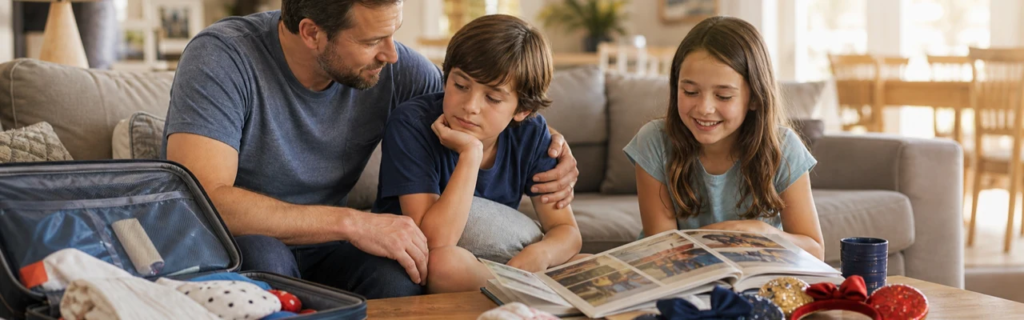
For children who need a sense of what comes next, shift the focus to something small and real: a family movie night on Friday, a visit to the playground, pancakes on Saturday, or choosing photos for an album. The next enjoyable thing does not have to compete with Disney World. It only has to remind them that ordinary life still contains good moments.
Let the Vacation Have a Proper Ending
Many families return late, drop the luggage, and launch straight into work and school. From a child’s point of view, the story simply stops. Creating a small ending ritual helps the brain file the vacation as a completed experience instead of something that was abruptly taken away.
You could share everyone’s favorite moment over dinner, unpack one souvenir together, or watch a short family video from the trip. Ask questions that invite a story rather than a one-word answer. “What made you laugh the hardest?” usually works better than “Did you have fun?” You can also ask what surprised them, what felt scary at first, or what they would tell another child going for the first time.
Do not force the conversation if your child is too tired or upset. The ritual can happen a few days later. The point is to give the family a gentle closing chapter, not schedule a mandatory vacation debrief at 0700 hours.
Turn Memories Into Something They Can Hold
Children often cope better when a big experience becomes tangible. Print a few favorite photos instead of leaving all 847 of them in Dad’s phone. Make a small photo book, a framed collage, or a simple memory box with park maps, drawings, pressed pennies, and other harmless treasures that survived the suitcase.
Let your child choose what belongs in the collection. Their favorite memory may not be the expensive meal or the attraction you crossed the park to reach. It may be the duck that followed you at lunch or the time Dad wore the poncho backward. Children assign meaning differently, and their choices help you see the vacation through their eyes.
A journal works well for older kids. They can write or draw one memory at a time without feeling as if they have been assigned a school report. The project should preserve joy, not become homework wearing mouse ears.
Bring a Little Disney Home Without Pretending You Still Live There
A small dose of vacation-themed fun can soften the transition. Cook a meal inspired by something you ate on the trip, listen to a favorite park soundtrack during cleanup, wear vacation shirts for a family movie night, or recreate a silly photo pose at home.
The key word is small. If every dinner, outfit, and conversation becomes an attempt to recreate the parks, home can start to feel like the disappointing substitute. Let the vacation add color to family life without taking it over.
This is also a good opportunity to connect the trip to creativity. A child could design an imaginary attraction, draw a new resort pool, build a park out of blocks, or write a menu for the world’s most impractical character breakfast. Creative play gives the excitement somewhere to go and helps children move from “It is over” to “I can still do something with this memory.”
Restore the Routine Gently
Vacations disrupt sleep, meals, screen time, and the basic human expectation that dessert should follow every lunch. Children may look emotionally crushed when some of the problem is simply exhaustion.
Return to normal bedtime, regular meals, school preparation, and familiar household expectations as soon as reasonably possible, but allow a little extra patience for the first few days. A quiet evening may be more helpful than an ambitious attempt to “keep the fun going.” If you can, avoid packing the first weekend home with errands and activities. Everybody may need a recovery day—including the dad who has discovered that unpacking is somehow less magical than packing.
Routine is not the enemy of fun. For children, routine creates safety. Knowing what breakfast, bedtime, and tomorrow will look like can make the emotional landing much smoother.
Give Them Some Control Over What Comes Next
Part of the disappointment comes from losing control. At Disney World, the family may have spent each day making choices: which ride, which snack, which character, which pool. Back home, adults suddenly seem to make every decision again.
Offer limited choices that fit real life. Let your child select the Friday movie, choose which vacation photo to print first, pick the Saturday breakfast, or decide which souvenir gets a special place in their room. Small choices restore a sense of agency without requiring you to hand over the family calendar and mortgage documents.
Older children can help create a modest savings jar for a future family adventure, Disney or otherwise. Keep the tone positive and realistic. The lesson is not that happiness must wait for another expensive trip. It is that families can dream, plan, save, and enjoy the process together.
Dad Strategy: Model the Landing You Want to See
Kids pay close attention to how adults talk after vacation. If Dad spends the week announcing that normal life is terrible, obsessively checking airfare, and complaining about work, children receive the same message: the good part is over and everything now is downhill.
You do not have to pretend you are thrilled to answer emails again. Be honest in a balanced way: “I miss the trip too, and I’m also happy to sleep in my own bed.” Talk about a favorite memory and something you are glad to return to. That “both things can be true” approach teaches children how to hold disappointment without letting it run the household.
It also helps to thank them for specific parts of the trip. Tell your child you loved riding beside them, hearing their joke in line, watching them try something new, or sharing a snack. The message becomes more powerful than “Disney was fun.” It becomes “Being with you was the part I loved.” That connection is available at home, and it is the piece they most need after the scenery changes.
Common Mistakes Dads Make
The first mistake is trying to fix the feeling immediately. Not every sad moment needs a solution. Sometimes your child needs a hug, a snack, and ten minutes to complain about the tragic absence of monorails in your neighborhood.
The second mistake is using the cost of the trip as leverage. “Do you know how much that vacation cost?” may be factually compelling, but it rarely helps a disappointed seven-year-old regulate an emotion. Save the budget discussion for age-appropriate conversations when everyone is calm.
The third mistake is comparing siblings. One child may bounce back by breakfast while another feels low for a week. Different reactions do not mean one child is more grateful. Temperament, age, sleep, and how strongly a child relies on routine all affect the transition.
Finally, do not make every sad comment a major event. Acknowledge it, offer connection, and continue with the day. The feeling usually shrinks faster when it is accepted without becoming the center of family life.
When the Sadness May Be More Than a Vacation Letdown
Most post-vacation disappointment improves as sleep and routine return. Pay closer attention if the sadness is intense, lasts for more than a couple of weeks, interferes with school or friendships, causes persistent sleep or appetite changes, or comes with frequent physical complaints or hopeless statements.
In that situation, the vacation ending may have uncovered anxiety, depression, school stress, or another concern rather than caused it. Check in with your child’s pediatrician or a qualified mental-health professional. You are not overreacting by asking for guidance; you are doing the dad job of noticing when the usual tools are not enough.
The Final Verdict
You cannot make a Disney World vacation last forever, and trying to do so would eventually become expensive, exhausting, and legally complicated around the castle. What you can do is help your child learn a valuable skill: wonderful things can end, sadness can be tolerated, memories can be kept, and ordinary life can become enjoyable again.
Listen before you solve. Be honest about future trips. Restore sleep and routine. Turn the best moments into stories, photos, and family traditions. Most importantly, remind your child—through words and your attention—that the real magic was not limited to a park. It was the time your family spent together, and that part came home with you.
Post-Disney World Blues: A Simple Dad Checklist
- Acknowledge that coming home feels disappointing.
- Share that you miss the vacation too without criticizing normal life.
- Avoid promising another trip unless it is genuinely planned.
- Prioritize sleep, regular meals, and a familiar routine.
- Create a simple vacation-ending ritual.
- Print a few favorite photos and let your child choose them.
- Plan one small, realistic family activity to look forward to.
- Bring home a little themed fun without trying to recreate the entire vacation.
- Offer age-appropriate choices to restore a sense of control.
- Seek professional guidance if the sadness is severe, persistent, or disrupting daily life.
Discover more from Disney World for Dads
Subscribe to get the latest posts sent to your email.