
Sick Child at Disney World? A Dad’s Guide to Saving the Vacation
Dad Tip
Take a quick photo of any rash, swelling or visible injury before it changes. Write down when symptoms began and any medicine already given so you can share accurate details with a medical professional.
Dad Strategy
Use the minimum-viable Disney day. When your child is ready to leave the room but not ready for a park marathon, choose one modest goal and treat one pleasant hour as a win.
Important
This guide provides trip-planning information, not medical advice. Contact your child’s pediatrician or a qualified health professional for guidance. For an emergency, call 911.
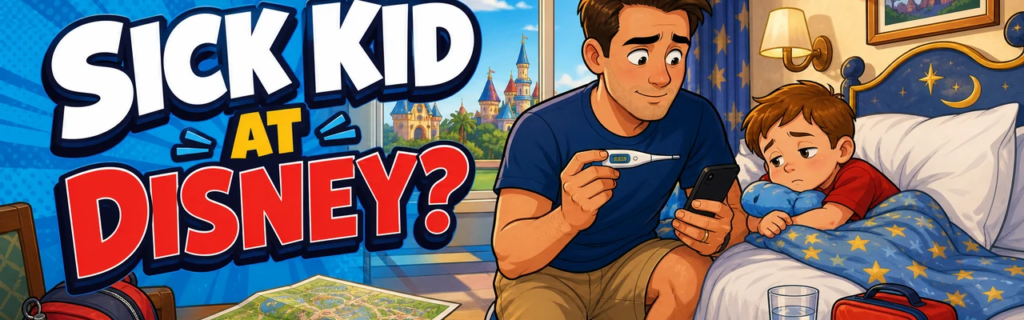
A sick child at Disney World can turn Dad from vacation strategist into nurse, logistics coordinator and keeper of the emergency plastic bag in about 30 seconds.
One minute, everyone is debating whether to ride Pirates of the Caribbean before lunch. The next, your child is pale, miserable and telling you that their stomach feels “weird.” That word covers everything from needing a snack to redecorating the resort room carpet.
The goal is not to diagnose your child beside a churro cart. It is to slow down, find the appropriate help and stop the rest of the family from making the situation worse through panic, pressure or wishful thinking.
This guide explains what Disney currently provides, how to choose your next practical step and how Dad can protect the rest of the vacation without treating a park reservation like a legally binding contract.
Important: This article provides trip-planning information, not medical advice. Contact your child’s pediatrician or a qualified health professional for guidance. For an emergency, call 911.
First, Stop Trying to Save the Park Day
Parents make questionable decisions at Disney World because the trip is expensive. We tell ourselves the child is probably tired, probably hungry or probably capable of rallying after a frozen lemonade.
Sometimes that is true. Sometimes it is not.
Your first move should be to stop moving. Find shade or air conditioning, let your child sit down and take a calm look at how they are acting. Ask simple questions. Find out what hurts, when it started and whether they can drink. If another adult is with you, send that person for water or help instead of dragging the whole family across the park.
Do not start promising that everyone will be back on rides in an hour. You do not know that yet. Your child needs to feel safe, not responsible for rescuing the vacation.
Dad Tip
Take a quick photo of any rash, swelling or visible injury before it changes. Write down when symptoms began and any medicine already given. That information can be useful when speaking with your pediatrician or another medical professional.
Where to Find First Aid at Disney World
Walt Disney World has First Aid centers at all four theme parks and its water parks. According to Disney, nurses are available during normal park operating hours and can provide over-the-counter medication, bandages and other basic assistance.
You do not need to memorize every location before the trip. Open the My Disney Experience map, search for “First Aid,” or ask the nearest Cast Member to direct you. If walking is difficult, tell the Cast Member what is happening instead of quietly attempting a half-mile family march.
First Aid is a sensible starting point for minor illness, a small injury or a child who needs a quiet place while you decide what comes next. It is not a substitute for an emergency department or a full medical evaluation.
Disney also says First Aid can store medication that requires refrigeration and provide containers for disposing of hypodermic needles. Families traveling with prescription medicine should still bring it in the original labeled container and follow their clinician’s storage instructions.
Know When the Situation Is an Emergency
Dad does not receive bonus points for personally transporting a seriously ill child through the TTC.
The American Academy of Pediatrics advises calling emergency medical services for warning signs such as difficulty breathing, decreased alertness or unresponsiveness, a seizure, bleeding that cannot be stopped, a serious allergic reaction, a severe injury or significant dehydration. This is not a complete list.
If you believe your child may be in danger, call 911. Tell the dispatcher exactly where you are. In a theme park, also alert a nearby Cast Member so Disney personnel can help emergency responders reach you.
When the situation is concerning but does not appear life-threatening, call your pediatrician, use telehealth or seek urgent care. Let a medical professional help determine the right level of care.
Your Medical-Care Options Around Disney World
Disney’s current health-care partner is AdventHealth. The available services give families several options beyond leaving the property and searching “doctor near me” while everyone argues in the car.
AdventHealth Care Concierge
Disney directs guests to AdventHealth at 407-939-7480. The Care Concierge can help connect guests with appropriate services and is currently listed as available daily from 7:00 a.m. until 11:00 p.m. Eastern Time.
Because hours and services can change, confirm the details when you call.
Telehealth
AdventHealth offers video visits through its app. Disney describes this as a 24-hour option for non-emergency concerns, with prescriptions sent to a preferred nearby pharmacy or delivered to a Walt Disney World hotel when available.
Telehealth can be useful when your child is stable and resting but you need professional guidance. Check whether your own pediatrician or health insurer also offers a telehealth service before the trip.
In-Room Medical Visits
AdventHealth currently advertises in-room provider visits at Walt Disney World Resort hotels from 8:00 a.m. to 8:00 p.m. A provider generally arrives within two hours.
This convenience is not cheap. Disney currently lists visits starting at $325, self-pay, with additional charges possible. Confirm the current price and what is included before booking.
For a child who should not be carried through a lobby or driven around town, an in-room visit may be worth considering. A provider may still refer the family to urgent care if testing or treatment cannot be handled in the room.
AdventHealth Centra Care Urgent Care
AdventHealth Centra Care near Walt Disney World treats adults and children. Disney says complimentary transportation is available for Walt Disney World Resort guests and can be arranged through a park First Aid station, the Disney Resort front desk or AdventHealth.
Ask about the current clinic hours, transportation details, insurance and expected costs when arranging care.
Prescription Delivery
AdventHealth advertises prescription delivery to Walt Disney World Resort hotels and theme parks. Arrangements can be made through the same Care Concierge number.
Do not assume every medication will be available immediately. If your child relies on prescription medication, pack enough for the trip plus a reasonable delay, keep it in your carry-on and ask the prescribing clinician what to do if it is lost.
What Dad Should Do While the Child Rests
Once the child is receiving appropriate care, the next challenge is managing the family.
Divide the Adults Without Creating a Villain
If two adults are traveling, one may stay with the sick child while the other takes the healthy children somewhere else. That is not abandoning anyone. It can give the sick child a quiet room and prevent siblings from spending the day whispering, complaining and testing whether hotel furniture is climbable.
Switch caregivers when practical. The same parent should not automatically lose every remaining park hour.
If you are traveling alone with the children, simplify aggressively. Room service, food delivery, television and an early bedtime are now the plan. This is not the night to prove that one parent can still execute the fireworks itinerary.
Handle Food Carefully
Follow the advice of your child’s clinician regarding food and fluids. Do not force a big meal because the dining reservation required an alarm 60 days ago.
Cancel what you can. Check the current cancellation terms in the My Disney Experience app and contact Disney if an illness prevents you from using a reservation. Do not assume a fee will automatically be waived, but it is worth explaining the situation.
Quiet the Room
Close the curtains, lower the temperature to a comfortable level and charge the phones. Put water, tissues, a trash can and any clinician-approved supplies within reach.
Then let the child sleep. Nobody recovers faster because Dad keeps asking, “So, do you think you could handle EPCOT tonight?”
How to Decide What Happens Tomorrow
Do not make tomorrow’s decision while everyone is exhausted and upset. Reassess after rest and follow the guidance you received from your child’s pediatrician or treating provider.
Ask practical questions:
- Is the child drinking and keeping fluids down?
- Are symptoms improving, unchanged or getting worse?
- Does the child have enough energy for heat, walking, noise and long waits?
- Could the illness be contagious?
- What did the medical professional recommend?
If the child improves and a professional has not advised against activity, restart gently. Sleep late. Choose a shorter outing. Stay near the resort or visit a park with an easy exit. Avoid building a comeback day that begins at rope drop and ends after fireworks.
If the child is still sick, make it another rest day. A second day in the room is frustrating. Turning a manageable illness into a worse one because the family “has to get its money’s worth” is more frustrating.
Dad Strategy: Use the Minimum-Viable Disney Day
When your child is ready to leave the room but not ready for a full park day, choose one modest goal:
- Eat one simple meal outside the room.
- Take a short Disney transportation ride.
- Visit the resort lobby or gift shop.
- Watch nighttime entertainment from the resort if it can be done comfortably.
- Spend a brief period at the park closest to your hotel, with no must-do attraction list.
One pleasant hour is a win. You are rebuilding confidence, not attempting a theme-park combine.
Protect the Rest of the Family
Illness can spread quickly when a family shares one room, one bathroom and apparently one water bottle no matter how many you packed.
Use common-sense hygiene. Wash hands thoroughly, avoid sharing cups and utensils, clean frequently touched surfaces when possible and give the sick child space. Follow any isolation or masking advice provided by a medical professional.
If symptoms suggest a contagious illness, keeping the child out of crowded queues and transportation protects other guests as well as your family. Disney World will still be there after the fever is gone.
Call Your Travel Insurer and Review Your Tickets
If illness costs your family several vacation days or forces you to return home, document what happened.
Keep medical receipts, visit summaries, prescription records and cancellation notices. Contact your travel-insurance provider promptly if you purchased coverage. The policy—not the phrase “trip protection”—determines what may be reimbursed.
You can also ask Disney what options apply to unused admission, resort nights or prepaid experiences. Do not promise the family a refund or ticket extension until Disney confirms it. Policies, ticket terms and the circumstances of each case vary.
If the trip continues, rebuild the itinerary around the days and energy you actually have. Our guide to building a first Disney World itinerary can help you decide what is still worth protecting. If tempers start rising, use the same reset approach described in Arguing at Disney World? How Dad Can Reset the Day.
Pack a Small Sick-Day Kit Before Leaving Home
You cannot pack an entire pharmacy, and you should not give a child unfamiliar medicine without appropriate guidance. You can, however, bring the basics your family already uses.
Keep prescription medication and essential supplies in your carry-on, not checked luggage. Before traveling, ask your pediatrician about any destination-specific concerns and how to reach the office after hours.
Our Disney Dad pre-flight checklist covers the larger departure plan, while the list below is the small health-related portion worth checking separately.
Frequently Asked Questions
Does Disney World have nurses?
Disney says nurses are available at theme-park and water-park First Aid centers during normal park operating hours. They can assist with over-the-counter medication, bandages and other basic needs.
Can Disney First Aid diagnose my child?
Treat First Aid as a place for basic assistance and help finding the next level of care. Contact your pediatrician or another qualified health professional when your child needs diagnosis or treatment.
Can a doctor visit a Disney Resort room?
AdventHealth currently offers in-room visits at Walt Disney World Resort hotels during listed service hours. These visits are self-pay, begin at a substantial cost and may lead to an urgent-care referral.
Is transportation to urgent care free?
Disney currently says complimentary transportation to AdventHealth Centra Care Urgent Care can be arranged for Walt Disney World Resort guests through First Aid, a Disney Resort front desk or AdventHealth. Confirm availability when requesting it.
Can medicine be delivered to a Disney hotel?
AdventHealth currently advertises prescription delivery to Walt Disney World Resort hotels and theme parks. Availability and timing depend on the prescription and circumstances.
The Dad Verdict
When a child gets sick at Disney World, the vacation is not automatically ruined. It has changed.
Your job is to stop chasing the original schedule, get appropriate help and make the next good decision. Sometimes that means an hour at First Aid. Sometimes it means a telehealth call, urgent care or two days of cartoons in the resort room. In an emergency, it means calling 911 and forgetting the itinerary entirely.
The child will not remember which Lightning Lane you missed. They will remember whether Mom and Dad made them feel safe when the magic disappeared for a while.
Final Sick-Day Checklist for Dads
- Save your pediatrician’s phone number before the trip.
- Save AdventHealth’s Disney guest number: 407-939-7480.
- Know that every Disney theme park and water park has First Aid.
- Keep prescriptions and essential supplies in your carry-on.
- Bring insurance cards and a list of medications and allergies.
- Record when symptoms began and what medicine was given.
- Use First Aid for basic assistance and help finding care.
- Call 911 for an emergency.
- Ask a medical professional when you are unsure what level of care is needed.
- Cancel or adjust reservations instead of pushing a sick child.
- Keep medical and cancellation documentation for insurance.
- Restart the vacation slowly only when the child is ready.
Sources
- Walt Disney World First Aid
- Walt Disney World Guest Health Care Services Presented by AdventHealth
- AdventHealth World of Wellness
- American Academy of Pediatrics: When to Call Emergency Medical Services for Your Child
Discover more from Disney World for Dads
Subscribe to get the latest posts sent to your email.