Is Following Disney Influencers Worth It? The Honest Truth Behind the Curated Fantasy
Dad Tip
Follow by specialty, not follower count. The creator who answers your family's exact question is more valuable than the biggest account showing its twentieth perfect castle breakfast.
Dad Strategy
For any expensive recommendation, use three sources: the creator for the demonstration, Disney for the current rule, and your own budget for permission.
Important
A discount code proves the creator has a commercial relationship. It does not prove the linked hotel, ticket seller, travel product, or planning service is your best value.
There is a dangerous moment in Disney World planning when Dad watches three perfectly edited videos and becomes convinced the family needs a $900 hotel upgrade, matching shirts, six restaurant reservations and a snack that apparently requires its own cinematic soundtrack.
Ten minutes earlier, he only wanted to know where the bathrooms were.
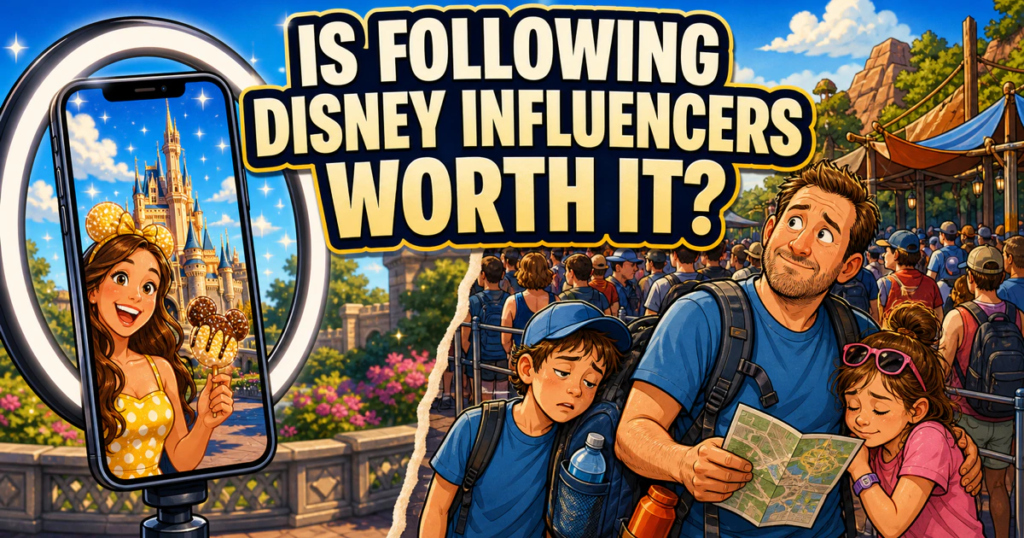
That is the tension behind following Disney influencers. The best creators can save hours of research, demonstrate complicated tools and show details Disney’s official pages cannot capture. The worst can turn a family vacation into a comparison contest against someone whose trip may be sponsored, heavily edited or simply built around a very different budget.
Quick answer: Yes, Disney influencers can be worth following—but use them as scouts, not as your family’s tour directors. Follow creators who explain tradeoffs, disclose financial relationships, date their advice and admit when an experience is not typical.
The real question is not whether a creator is cheerful, polished or popular. It is whether the content helps you make a better decision for your family after you account for money, crowds, heat, tired children and the uncomfortable fact that nobody in your group wakes up camera-ready.
What Disney Influencers Genuinely Do Well
1. They show what a written description cannot
A creator can walk through a hotel room, show the storage, demonstrate a stroller route, compare the actual size of two snacks or reveal that the “short walk” from a room to transportation is short only if your family trains together on weekends.
That visual evidence is useful. Disney’s official pages tell you what is available. A good independent creator shows how the experience feels, where confusion happens and what a tired parent should know before arriving.
2. They can explain complicated planning tools in plain English
The official My Disney Experience app can organize plans, display attraction wait times and show times, support dining and mobile ordering, provide navigation and manage Lightning Lane selections. That is a lot of vacation living inside one phone.
A clear screen recording from an experienced creator can make those features easier to understand. When Dad is trying to learn the app at 6:58 a.m. while someone asks where the sunscreen is, “tap this, then this” has genuine value.
3. Specialists can answer questions mainstream guides overlook
Some creators focus on food allergies, mobility, sensory needs, large families, solo parents, toddlers, plus-size comfort, resorts, transportation or a single park. Their narrow expertise may be more useful than a giant account trying to cover everything from cruise ships to collectible popcorn buckets.
The right specialist can show the difference between a technically possible plan and one a real family can comfortably execute.
4. Good creators update faster than traditional guidebooks
Disney World changes constantly. Construction routes shift. Menus change. A process that worked on the creator’s last trip may look different next month. Social media can surface those changes quickly—provided the creator dates the information and distinguishes a temporary condition from a permanent rule.
This is especially helpful when combined with official confirmation. Let the creator alert you to the change; let Disney’s current page or app confirm what applies on your date.
Dad Tip: Follow by specialty, not follower count. The creator who answers your family’s exact question is more valuable than the biggest account showing its twentieth perfect castle breakfast.
Where the Curated Disney Fantasy Begins
Curated does not automatically mean dishonest. Every article, photo and video is edited. A creator has to select an angle, remove dead time and make the story understandable. Nobody wants a forty-seven-minute uncut video of a bus stop.
The problem begins when the selection makes an unusual experience look normal.
The camera removes the parts Dad actually needs to plan for
A thirty-second reel can show the room reveal, the empty walkway and the first bite. It may skip the ninety minutes of transportation, the child who refused the meal, the rain delay and the family debate over whether another paid add-on was worth it.
Those omitted moments are not proof of deception. They are proof that a highlight reel is a poor substitute for a complete operating plan.
Content creators often travel differently from ordinary families
A full-time creator may visit frequently, hold an annual pass, attend previews, enter a park only to film one attraction or treat a meal as a business expense. A family visiting once every three years has limited days, expensive tickets and children who do not understand why Dad needs twelve takes of the cupcake.
The creator’s recommendation may be sincere and still be a bad fit. “Worth it” means something different when the reviewer can return next Tuesday.
The algorithm rewards emotion, novelty and certainty
“This may work for some families depending on their priorities” is honest but not exactly a thumbnail screaming for attention. “You MUST do this” and “Disney just ruined everything” create stronger reactions.
That encourages two forms of distortion: every new snack becomes life-changing, and every inconvenience becomes a crisis. Ordinary, useful advice lives in the less glamorous middle.
Constant exposure quietly increases the budget
One video suggests a resort upgrade. Another recommends a character meal. A third says the limited-edition merchandise will disappear. Individually, each suggestion may be reasonable. Together, they can build a vacation that costs thousands more than the trip you originally wanted.
Social media is very good at turning optional experiences into emotional requirements. Your children did not know the premium dessert party existed until Dad introduced it during “research.”
Important: A discount code proves the creator has a commercial relationship. It does not prove the linked hotel, ticket seller, travel product or planning service is your best value.
Follow the Money Without Assuming Everyone Is a Villain
Creators deserve to be paid for useful work. Producing good video, maintaining a website, traveling, testing products and answering questions all take time and money. Earning income does not automatically make a recommendation false.
But the relationship should be visible because it can affect how you weigh the recommendation.
The Federal Trade Commission’s influencer guidance says a material connection can include payment, employment, family relationships, free or discounted products and other perks. The FTC says disclosures should be easy to notice and understand, placed with the endorsement itself and not buried after “more,” inside a hashtag pile or only on a profile page.
The FTC also warns that tagging a company is not the same as disclosing a relationship, and a platform’s built-in disclosure tool may not be enough by itself. Clear language such as “ad,” “sponsored,” “paid for by” or an explanation that a stay or product was provided helps readers understand the arrangement.
This is not merely an American concern. A 2024 monitoring report from the United Kingdom’s Advertising Standards Authority found that more than half of the likely influencer ads it examined in the fashion and travel sectors were undisclosed or inadequately disclosed. That does not describe every Disney creator. It does explain why viewers should look rather than assume.
Common relationships worth noticing
- Hosted or discounted travel: hotel stays, meals, tickets, previews or special access provided at no cost or below normal cost.
- Affiliate links: the creator may earn a commission when you book or buy through the link.
- Paid sponsorships: a company pays for the content or placement.
- Owned products or services: courses, memberships, travel planning, merchandise or subscription communities sold by the creator.
- Access incentives: even without direct payment, creators may fear that harsh criticism could reduce future invitations or relationships.
A disclosed sponsorship can still contain honest, useful information. An undisclosed relationship does not prove every claim is wrong. Disclosure simply gives Dad the missing label on the price tag.
The Disney Influencer Reality-Check Table
| What you see | What to ask | Strong trust signal |
|---|---|---|
| “Must-do” recommendation | Must-do for whom, at what price and instead of what? | Explains the family type, tradeoff and cheaper alternative. |
| Perfect empty-park footage | When was it filmed, and was it a preview, event or unusual hour? | Names the date, time and access conditions. |
| Hotel or meal review | Who paid, what was provided and what would the normal total cost be? | Clear disclosure plus specific weaknesses and value comparisons. |
| Breaking-news advice | Is this confirmed, rumored or based on one day’s experience? | Links to the official source and corrects old posts. |
| Affiliate discount | Did I compare the final price, refund terms and reputation elsewhere? | Labels the commission and does not create fake urgency. |
Green Flags: Creators Worth Keeping in Your Feed
- They date advice and explain when conditions may change.
- They link to official policies instead of asking you to trust a screenshot.
- They disclose hosted stays, free products, commissions and sponsorships clearly.
- They discuss price, opportunity cost and who should skip the experience.
- They show mistakes, waits and logistical friction—not only the reveal.
- They separate personal preference from a factual rule.
- They correct outdated information without pretending the original post never existed.
- They can say, “This was good, but I would not pay full price.”
Red Flags: When to Unfollow or Double-Check
- Every product is amazing, urgent and available through the creator’s link.
- Disclosures are vague, buried or missing while discounts appear everywhere.
- The creator gives precise rules without dates or official sources.
- Negative comments or reasonable questions disappear while praise remains.
- Advice assumes unlimited park days, frequent return trips or a budget nobody discusses.
- The content makes ordinary families feel that a basic vacation is inadequate.
- Rumors are presented as confirmed news because uncertainty gets fewer clicks.
Featured Callout: The best Disney influencer does not make your trip look inadequate. The best one helps you spend less time, money and patience discovering what your family never needed.
What No Influencer Can Know About Your Family
No creator knows whether your child will tolerate an hour-long queue, whether your spouse considers rope drop a vacation or a workplace violation, or whether your family would rather ride three attractions happily than complete twelve while arguing.
That is why even excellent advice needs translation. A creator reports the experience. Dad decides whether it fits the people traveling with him.
If a creator’s itinerary assumes a dawn-to-fireworks marathon, compare it with our case for taking a Disney World midday break. If the feed is making every attraction feel mandatory, use our Magic Kingdom stress-free dad hacks to set priorities and backup plans. And if the family is already snapping at each other while planning, the Disney World argument reset guide may be more useful than one more perfect itinerary.
A Better Way to Use Disney Influencers
Build a small, mixed planning team
Follow a few creators with different strengths instead of letting one account become the family’s unofficial vacation authority. Choose one strong logistics explainer, one creator who matches your family needs and one source that is willing to criticize value.
Use the three-source rule for expensive decisions
- The creator: What does the experience look and feel like?
- The official source: What are the current rules, features, hours and restrictions?
- Your family: Does this solve a real problem at a price you willingly chose?
For a snack, one enthusiastic video is harmless. For a hotel change, ticket purchase or expensive planning service, slow down and compare.
Save ideas before buying anything
Create three lists: essential, nice if convenient and social-media temptation. Let ideas sit for forty-eight hours. The items that still solve a family need can move forward. The souvenir that was “absolutely essential” at 11:43 p.m. often loses authority by breakfast.
Unfollow accounts that make planning worse
If following someone consistently creates anxiety, envy or pressure to spend, the account is not serving the trip. You do not owe a creator continued access to your attention because they once posted a useful transportation map.
Dad Strategy: For any expensive recommendation, use three sources: the creator for the demonstration, Disney for the current rule and your own budget for permission.
Frequently Asked Questions
Are Disney influencers paid by Disney?
Some creators may receive hosted access, invitations, products or other benefits; many pay for their own trips and have no Disney relationship. Others earn money from third-party travel companies, affiliate links, sponsorships or their own products. Check the disclosure attached to the specific post rather than assuming every creator has the same arrangement.
Does sponsored content mean the review is fake?
No. A sponsored review can be accurate and valuable. The key questions are whether the relationship is clearly disclosed, the creator discusses meaningful drawbacks and the claims match official facts and typical guest conditions.
How many Disney influencers should I follow?
Enough to get different perspectives, but not so many that every optional purchase begins to feel mandatory. Three to six useful specialists are usually easier to evaluate than a feed filled with dozens of nearly identical “must-do” lists.
Should I trust real-time crowd and wait-time reports?
Use them as a snapshot, not a promise. Crowd conditions can change with weather, events, attraction downtime and the day of the week. Confirm current wait times, show times and park hours in the official My Disney Experience app during your trip.
The Final Verdict
Is following Disney influencers worth it?
Yes—when their content reduces uncertainty instead of creating insecurity.
Good creators can demonstrate confusing systems, expose practical details, help families find niche information and make planning more enjoyable. They provide genuine value when they are transparent about money, honest about limitations and careful about changing facts.
The curated fantasy becomes a problem when a highlight reel is treated like a normal itinerary, commercial relationships stay hidden or Dad starts buying someone else’s version of the perfect trip.
Follow creators who make you better informed, not merely more impressed. Take the useful idea, verify the current fact, check the family budget and leave the rest in the feed.
Your vacation does not need to look like content. It needs to work for the people standing beside you after the phone goes back in your pocket.
Official Sources
- Federal Trade Commission: Disclosures 101 for Social Media Influencers
- Federal Trade Commission: Endorsement Guides Questions and Answers
- Walt Disney World: My Disney Experience Mobile App
- UK Advertising Standards Authority: 2024 Influencer Ad Disclosure Report
Disclosure rules, platform features and Disney World tools can change. Check the current official guidance and the disclosure attached to the specific content before making a purchase.
Discover more from Disney World for Dads
Subscribe to get the latest posts sent to your email.